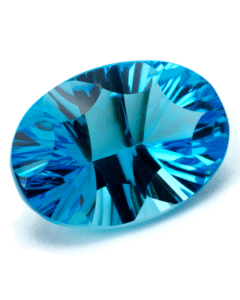
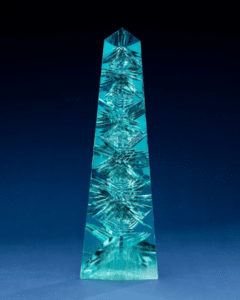
Aquamarine has long been associated with clarity, calm, and the changing light of early spring.
As March’s birthstone, it sits at the turning point of the year — when winter begins to wane and brighter days start to return.
Its cool blue tones feel fitting for the season: clean, fresh, and tranquil.
What Is Aquamarine?
Aquamarine is a blue to blue-green variety of beryl — the same mineral family as emerald. Indeed they could have been found in the same source as some aquamarine beads have been found with Emerald ones in an Ancient Egyptian burial.
Its name comes from the Latin aqua marina, meaning “water of the sea.” The first use of the word aquamarine only goes as far back as 1677 but the stone was first recorded as far back as the Ancient Sumerians 4000 years ago. Although this may have been a confusion between this and the clear beryl as the name used back then ‘berrylios’ was interchangable.
Its colour ranges from pale, almost icy blue to deeper ocean shades, sometimes with a subtle green undertone. The blue comes from traces of iron within the crystal structure.
Aquamarine is prized for its clarity and durability, making it well suited to everyday jewellery as well as statement pieces.
Deposits have been found in Brazil, Mozambique, Madagascar, Nigeria, Pakistan, Sri Lanka, India, China, Myanmar and the US.
GEMMOLOGICAL PROPERTIES OF AQUAMARINE
- Color Blue to blue green
- Family Beryl
- Mohs Scale Hardness 7.5-8
- Specific Gravity 2.68-2.74
- Refractive Index 1.567-1.590
- Lustre Vitreous (glass-like)
- Crystal System Hexagonal
- Transparency Transparent to translucent
- Chemical Formula Be3Al2Si6018
Aquamarine in History and Folklore
Aquamarine’s connection to the sea isn’t just in its name.
Ancient sailors carried it as a protective talisman, believing it would calm waves and ensure a safe journey. The Romans associated it with Neptune (and thus Greeks with Posideon) and safe passage across water.
In medieval Europe, it was thought to promote reconciliation and strengthen relationships.
While we may no longer rely on gemstones to guide ships home, these historical associations still shape how we view aquamarine today: as a stone of calm, balance, and steady confidence.
Not unlike Amethyst, aquamarine became more abundant after large deposits were found in Brazil in the 16th century. A particularly prized version of Brazilian aquamarine called Santa Maria is a deep blue shade and this is because of higher amounts of iron in the gem’s crystal structure. You can also heat treat the stone to turn it a darker shade of blue but this needs to be declared by sellers and jewellers.
Metaphysical and Healing Associations
Throughout history, aquamarine has been linked with:
Emotional balance
Clear communication
Courage in difficult conversations
Stress relief
Letting go of tension
Rejuvenation and rebirth
It is often associated with the throat chakra — symbolically connected to expression and truth.
Whether or not you subscribe to crystal healing, aquamarine’s clear, open colour naturally evokes clarity and composure.
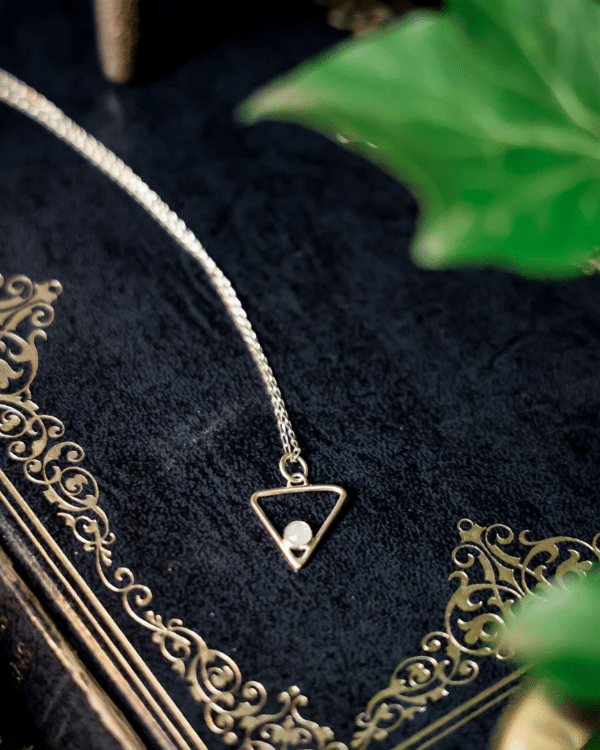
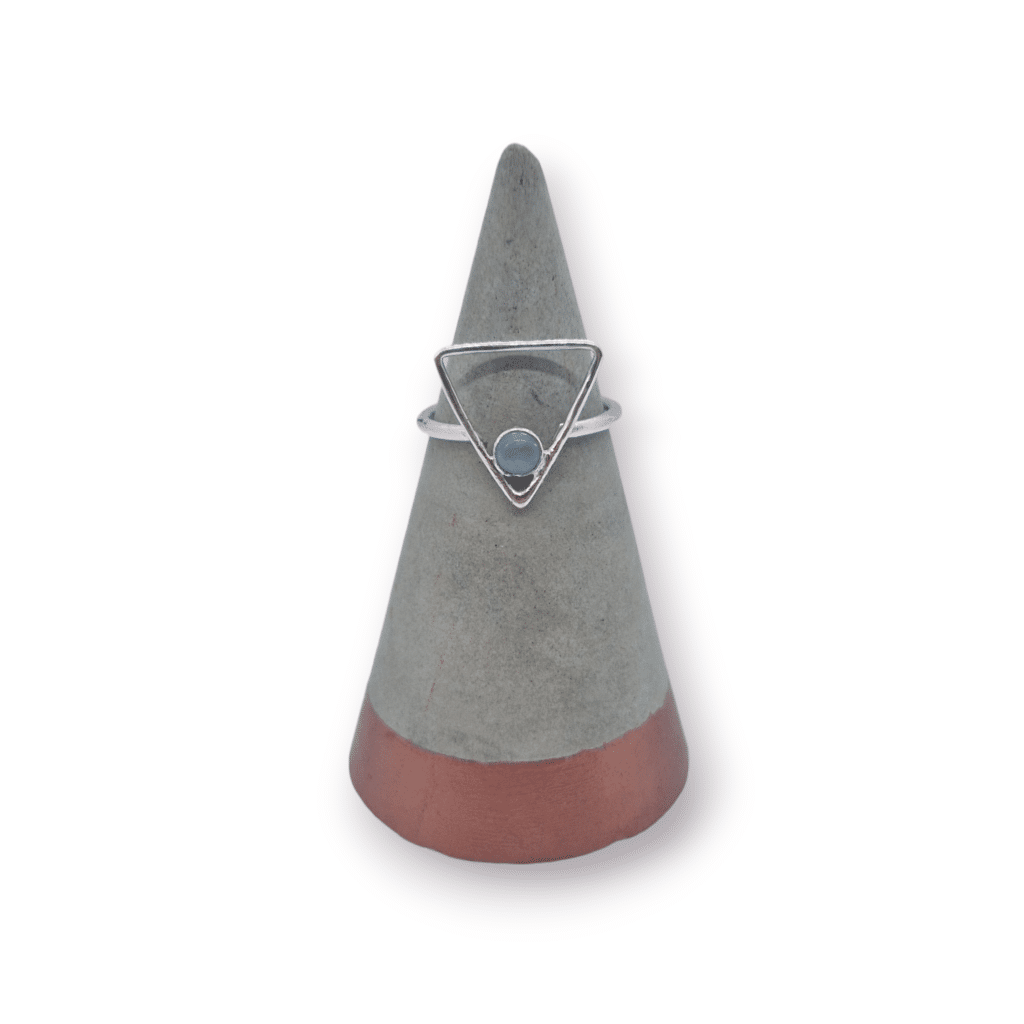
Aquamarine is also associate with the Water element and the sign of Pisces which also happens to be the star sign for most of March. If you’re drawn to this element check out my water element necklace and ring.
Aquamarine as March’s Birthstone
Aquamarine was officially designated as March’s primary birthstone in 1912 by the American National Retail Jewellers Association, though bloodstone is still recognised as an alternative. Bloodstone is also a zodiac stone for Aries season which starts on 21 March.
Traditionally, aquamarine symbolises:
Renewal
Youthfulness
Protection
Hope
Safe journeys
Its cool blue hue feels particularly appropriate for those born in March — a month defined by transition and fresh beginnings.
Aquamarine in MY Jewellery
With a hardness of 7.5–8 on the Mohs scale, aquamarine holds up well in rings, pendants, and earrings.
It pairs beautifully with silver, which enhances its cool tones, and with copper, where contrast can make the blue appear even brighter.
In handmade gemstone jewellery like mine, aquamarine brings lightness and refinement — whether chosen as a meaningful birthstone gift or simply for its clean blue beauty.
Why Aquamarine is AMAZING
Every birthstone carries centuries of story and symbolism. Aquamarine’s story is one of steadiness — of safe passage, clear expression and renewal.
Whether you wear it for its history, its symbolism, or simply its colour, aquamarine remains quietly calm and peaceful.
If March is your birth month — or if you’re drawn to its cool clarity — explore the handmade aquamarine pieces within my gemstone jewellery collection and choose the piece that feels personal to you.