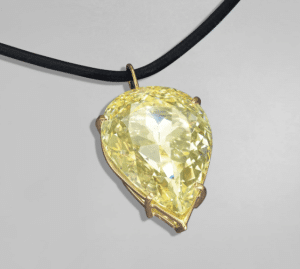
Diamond is the birthstone for April. It also happens to be my birthstone which I very happy about! Diamonds are a gemstone synonymous with endurance, clarity, and brilliant fire. It is the hardest natural mineral on Earth, formed under immense pressure over billions of years.
But beyond its brilliance and bridal associations, diamond carries a far older story – one shaped by empires, mythology and human fascination.
For those born in April like me, diamond is not simply about sparkle. It’s about resilience.
WHAT IS A DIAMOND?
GEMMOLOGICAL PROPERTIES OF DIAMOND
Colour Colorless, gray, brown, yellow, blue, pink, orange, red (V rare), purple, green, black
Family Diamond
Mohs Scale Hardness 10
Specific Gravity 3.50 – 3.53
Refractive Index 2.417 – 2.419
Lustre Adamantine, Highly reflective, brilliant
Crystal System Cubic
Transparency Transparent
Chemical Formula C
A BRIEF HISTORY OF DIAMONDS
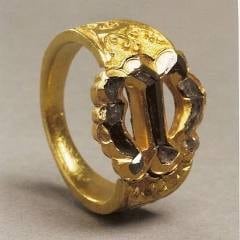
Diamonds were first mined in India over 2,000 years ago, where they were valued not only for beauty but for their supposed protective qualities.
DIAMOND IN MYTH & LORE
WHERE ARE DIAMONDS FOUND?
Today, diamonds are mined in Russia, Canada, Botswana and Australia, among others. Each region produces stones with distinct characteristics — from icy colourless gems to rare ‘fancy’ (coloured stones) shades.
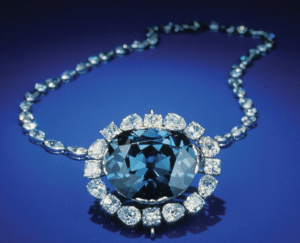
Some diamonds have entered royal collections quietly while. Others changed hands through conquest and political upheaval. In certain cases, the story of where a diamond was found cannot be separated from what happened after it was won.
‘CURSED’ DIAMONDS
METAPHYSICAL PROPERTIES OF DIAMONDS
💎 Diamonds symbolise strength, longevity, and commitment, making them ideal for engagement rings.
💎 Diamonds provide mental clarity, increase confidence, promote emotional balance, clear emotional and mental pain, stimulate creativity, and support spiritual evolution and enlightenment.
💎 Diamonds bring abundance, fearlessness, and spiritual enlightenment.
💎 Diamonds purify the body, detoxifying, boosting energy levels, and supporting healthy metabolism, alleviates dizziness and vertigo, and benefits brain function.
💎 Diamonds enhance the effects of other crystals as they are a powerful energy amplifier and they protect against electromagnetic stress.
THE FOUR C’S
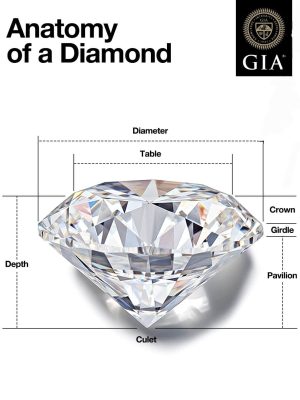
The grading system developed by the Gemological Institute of America evaluates diamonds using four criteria. These measures assess quality and value. The four C’s are the internationally accepted standard for evaluating a diamond’s quality as follows.
Cut – How well the stone reflects light.
Colour – Graded from D (colourless) to Z (light yellow or brown).
Clarity – Natural internal inclusions or surface marks.
Carat – The stone’s weight.
A diamond doesn’t have to score highly in all 4 areas to be the most expensive. Often some diamonds have inclusions but are curt well to hide them and it doesn’t ring true that the larger the stone the more expensive it is either.
ETHICAL SOURCING & MODERN DIAMONDS
Today, many buyers want to understand where their diamonds come from.
The Kimberley Process was introduced to reduce the trade in conflict diamonds. There is also growing interest in responsibly sourced natural stones, traceable Canadian diamonds, recycled or antique gems, and laboratory-grown alternatives.
Choosing a diamond now often involves balancing beauty, history and personal values.
SAME DIAMOND, DIFFERENT ORIGIN
Whether a diamond is formed under intense pressure within the layers of the Earth over billions of years or in a laboratory over a period of weeks, they are the same material. Both are made of carbon, both are sparkly. The difference is the story and the price.
Laboratory diamonds are usually cheaper per carat however they don’t have the mystical story behind them that natural diamonds do. Ultimately it’s down to personal preference.
You can find out more about this divisive topic here.
DIAMONDS IN JEWELLERY
While most associated with engagement rings, diamonds have long been worn as talismans and symbols of strength.
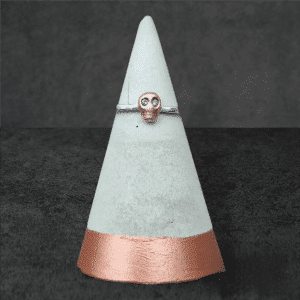
In contemporary jewellery, diamonds can be minimal, raw, antique-cut or quietly unconventional.
April sits between seasons. It’s Spring but there are often (April) showers although as it’s my birthday I can remember all weathers, it even snowed once!
Diamond mirrors that process. Formed in darkness. Shaped by pressure. Revealed in brilliance.
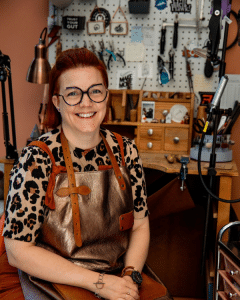
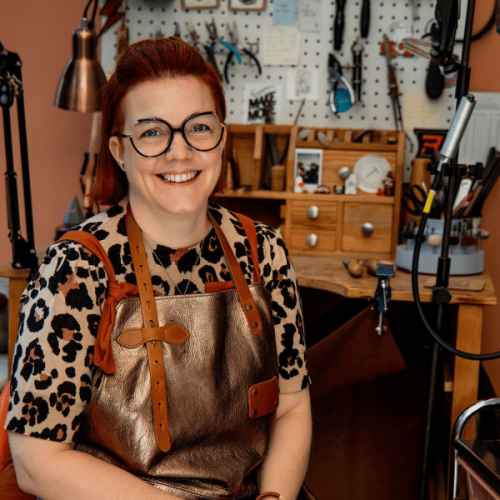
I currently don’t have any gemstone jewellery pieces that contain diamonds but I would LOVE to start making some. If you’d like to commission and piece do get in touch with me.
SOURCES