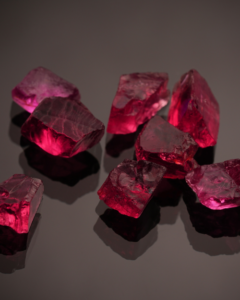
Emerald is one of the most recognisable gemstones in the world, known for its rich green colour and long history. As the birthstone for May, it’s often associated with spring. New growth, fresh energy, and a sense of renewal after the colder months.
Unlike gemstones that rely on high sparkle, emerald stands out for its depth and presence.
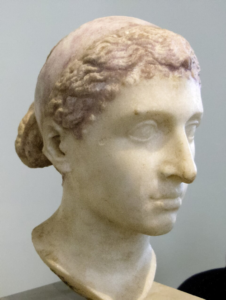
It’s a stone that has been valued for thousands of years (most famously by Cleopatra), not just for how it looks, but for what it represents.
What Is Emerald?
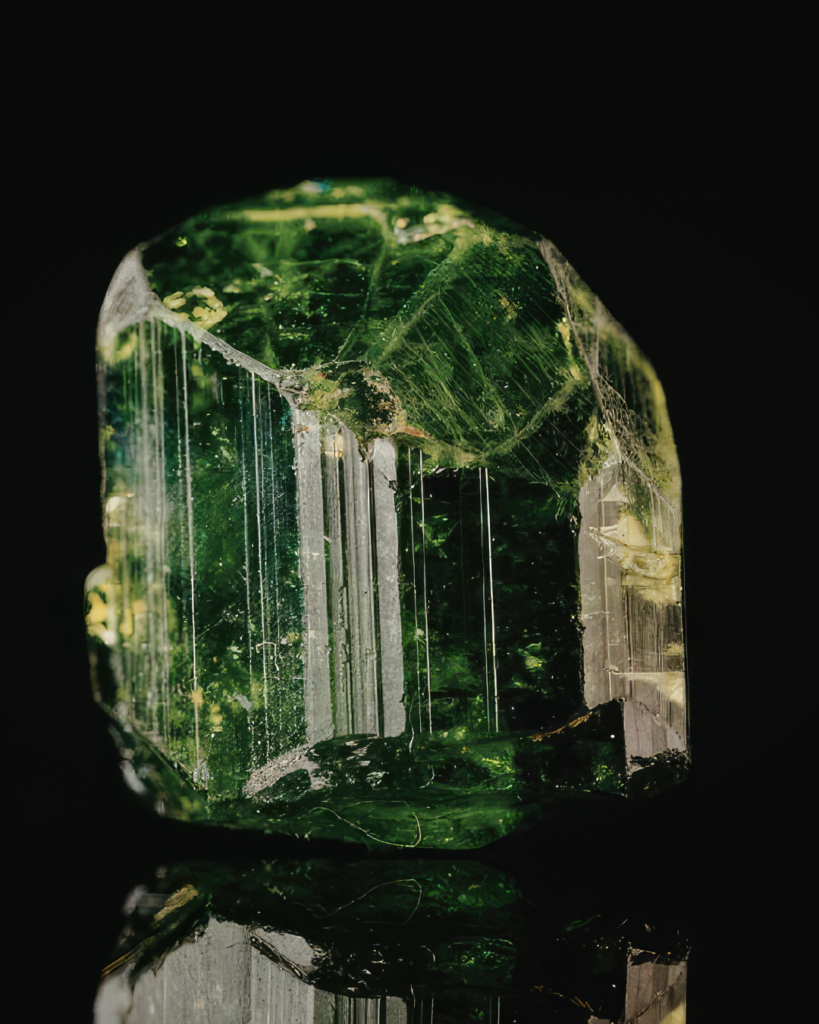
Emerald is a variety of the mineral beryl – the same family as aquamarine. Its green colour comes from trace amounts of chromium and sometimes vanadium.
Most emeralds contain natural inclusions, often described as “jardin” (French for “garden”) because of their moss-like internal patterns. These inclusions are completely normal and part of what gives emerald its character.
Although relatively hard, emeralds are more delicate than they first appear due to these inclusions, something worth keeping in mind when choosing or wearing them. They are not ideal in rings as these can be bashed and damaged easily. You should also never clean them in an ultrasonic cleaner but with gentle soapy water and soft toothbrush.
👉 If you enjoy learning about gemstone families, you might also like my guide to aquamarine (another member of the beryl family).
GEMMOLOGICAL PROPERTIES OF EMERALD
- Colour Green to bluish-green, caused by trace amounts of chromium, vanadium, or iron
- Family Beryl
- Mohs Scale Hardness 5 – 8
- Specific Gravity 67 – 2.78
- Refractive Index 560 – 1.605
- Lustre Vitreous
- Crystal System Hexagonal
- Transparency Transparent to opaque
- Chemical Formula: Be3Al2Si6O18 (Beryllium Aluminium Silicate)
A Brief History of Emerald
Emerald has been admired for thousands of years across different cultures.
In ancient Egypt, it was associated with rebirth and eternal life. It’s famously linked to Cleopatra, who was known to favour emeralds in her jewellery. Although these may have been confused with locally sourced periodot, another green stone. More on that in August!
Across South America, emeralds were mined long before European arrival, particularly in what is now Colombia—still one of the most important sources today.
In Europe, emerald became a symbol of wealth and status, often set into royal and ceremonial pieces.
👉 If you’re interested in how gemstones have been valued through history, you might also enjoy my posts on garnet and amethyst.
Emerald in Myth and Folklore
Like many gemstones, emerald has gathered its share of stories over time.
Said to reveal truth or expose lies
Thought to offer protection to travellers
Linked to clarity of thought and perception
Associated with long-lasting love rather than fleeting romance
Whether taken literally or not, these ideas reflect how people have connected meaning to gemstones throughout history.
👉 You can explore similar symbolism in our birthstone series, including February’s amethyst and April’s diamond.
Emerald as May’s Birthstone
As May’s birthstone, emerald is closely tied to the natural world and the shift into late spring.
It’s often associated with:
Growth and renewal
Balance and stability
Long-term connection and loyalty
Emotional balance
Honesty and openness
Personal growth
Strong, steady relationships
Emerald is also traditionally given for 20th and 35th wedding anniversaries, making it a meaningful choice beyond birthdays.
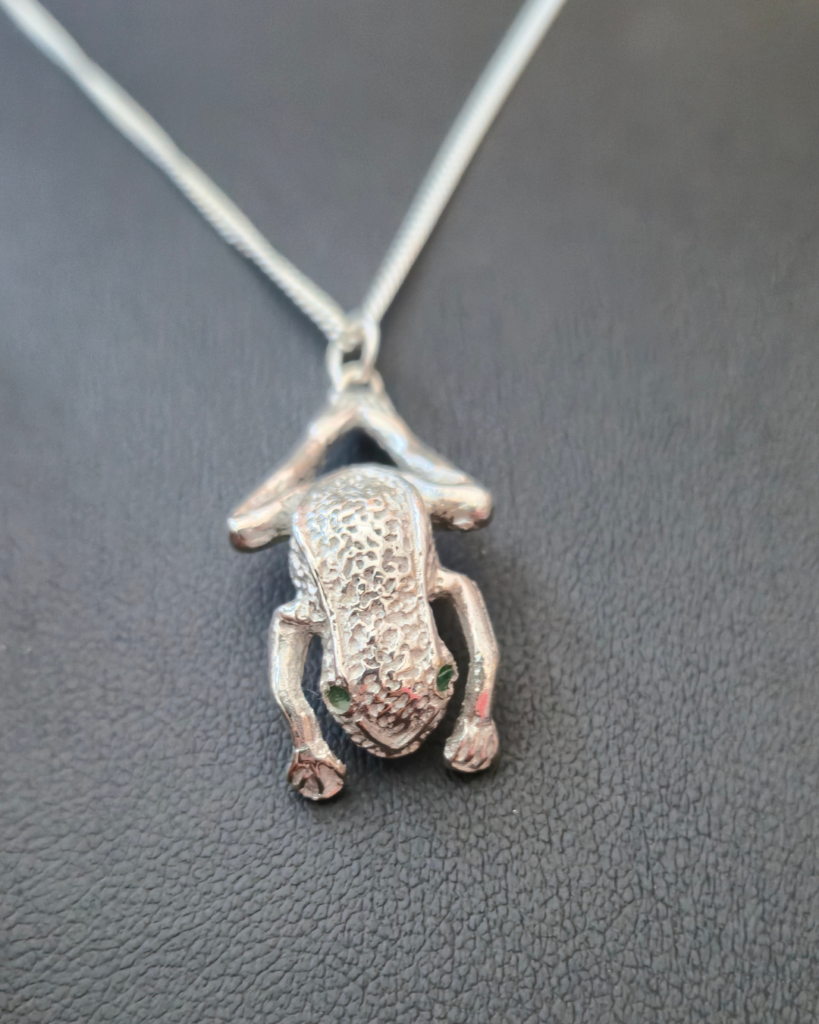
I used some tiny emeralds in a commission I did recently for a friend. I made a necklace from her Uncle’s special frog ring that had seen better days. I inset tiny emeralds into the eyes as this stone was special to her Uncle and her.
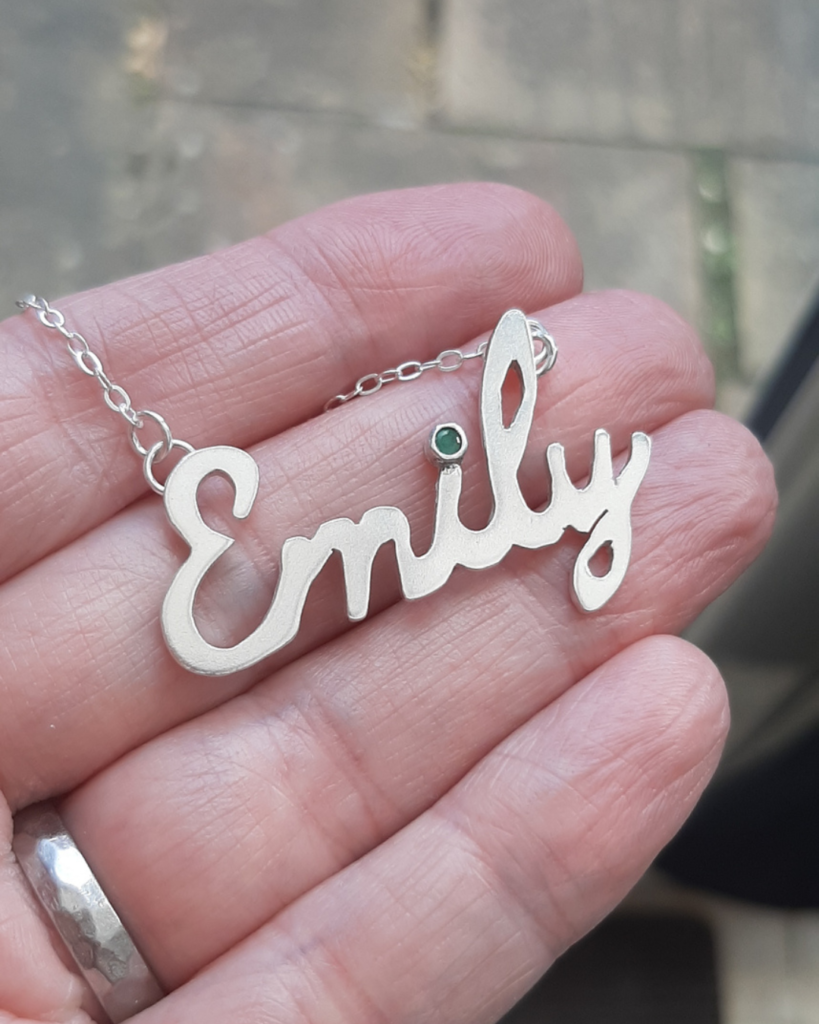
I also created a cute name necklace commission for a friend’s 40th May birthday
Emerald in Jewellery: Beauty & Care
Emerald is a striking choice in jewellery, whether used as a centrepiece or as a subtle accent.
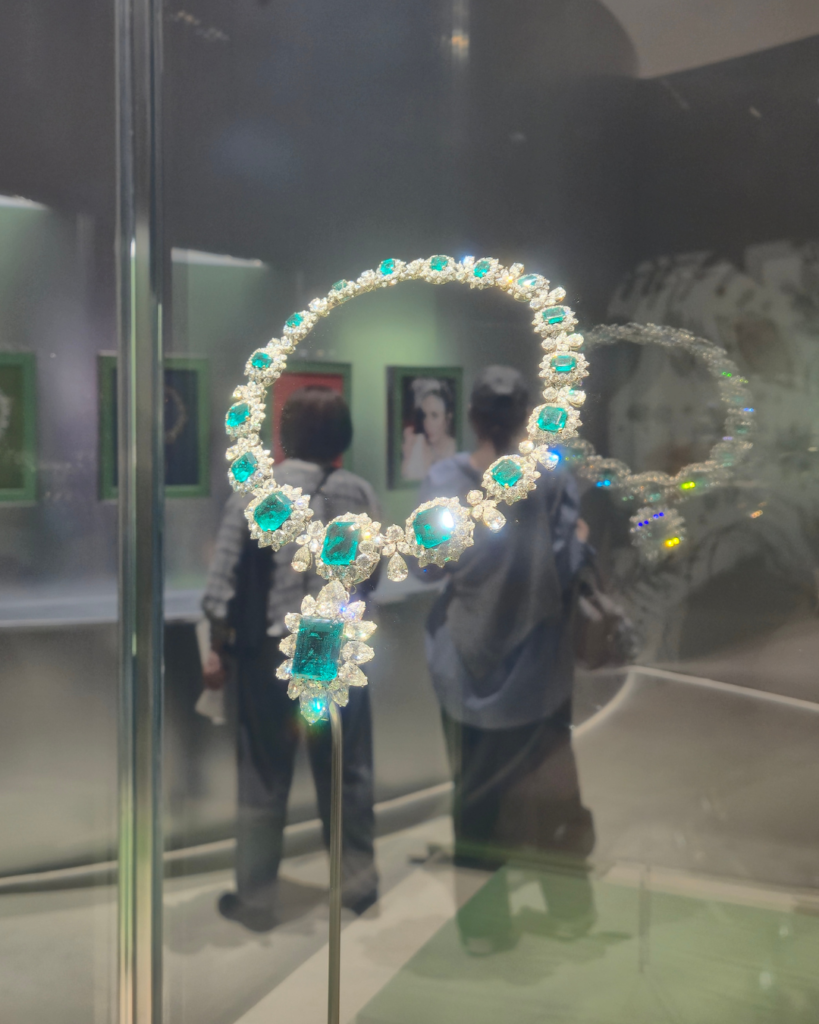
I saw some particularly stunning pieces at a Bvlgari exhibition while I was visiting Tokyo. Including this piece previously owned by Elizabeth Taylor.
But emeralds do need extra care because they contain inclusions, it is best to:
Avoid ultrasonic cleaners
Clean with warm water, mild soap, and a soft cloth
Store separately from harder gemstones
Avoid impact and sudden temperature changes
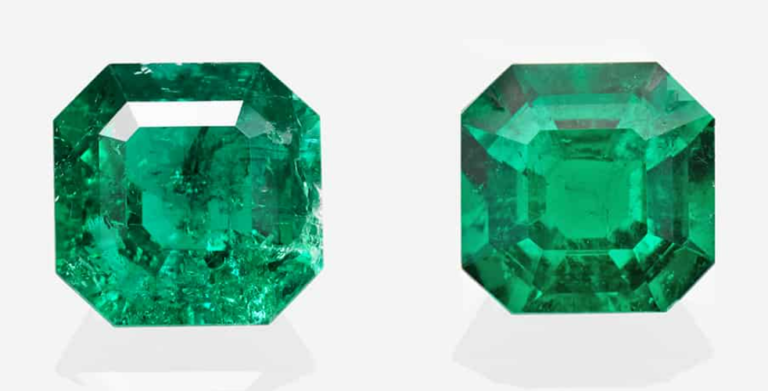
Most emeralds are treated with oil to improve clarity—this is standard practice and as long as it is declared when purchasing it’s nothing to be concerned about, but it does mean gentler care is important.
The one of the left has visible fissures and the one of the right has been ‘oiled’.
Why Emerald Still Stands Out
Emerald doesn’t rely on perfection and has remained relevant for a reason.
Inclusions are expected. Its vibrant colour is unmistakable. And its history is long enough to speak for itself.
With its distinctive colour, natural character, and long history, it offers something a little different from more traditional “sparkle-first” gemstones.
Whether you’re drawn to it as a birthstone or simply appreciate its depth and individuality, emerald is a stone that holds its place—quietly, but confidently.