BLOG

Diamond Cuts: Where Light Finds Its Shape

When you look at a diamond ring the stone sparkles like fire and that is no accident. The diamond has been given a modern round brilliant cut. This cutting technique has been honed over hundreds of years to really bring out the brilliance and ‘fire’ of the diamond.

Skilled cutters who specialize in diamond cutting turn this rough gem material into dazzling gemstones using painstaking processes that have been adapted over hundreds of years.

The process of cutting diamonds still relies on a series of exacting steps designed to maximize how brilliant, durable, and valuable a natural diamond becomes.

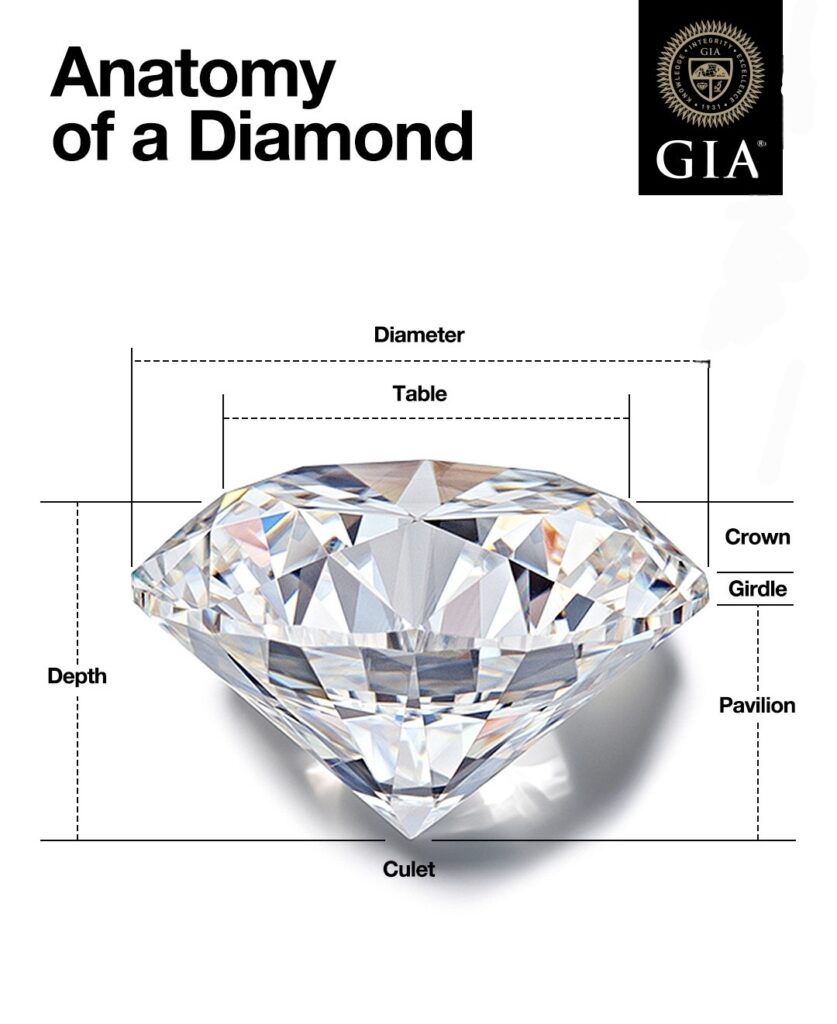
a diamond shaped object with words written around it showing all the different parts of a diamond including table, girdle, etc
Image courtesy of the GIA

The history of the engagement ring and its cut

Despite what De Beers, the famous diamond company, might have you think they were not the first people to use a diamond in an engagement ring. Their brilliant (excuse the gem pun) marketing of diamond engagement rings in the 1940s pushed the diamond to the become the preferred stone of engagement rings.

Mary Frances Gerety wrote the slogan “A Diamond Is Forever” for De Beers in 1947 but almost 500 years earlier there were two diamond betrothal rings. One was from Archduke Maximilian of Austria given to Mary of Burgundy in 1477 and the other was two years prior to that at the wedding of Costanzo Sforza and Camilla D’Aragona in Italy. Their wedding poem read “Two wills, two hearts, two passions are bonded in one marriage by a diamond”.

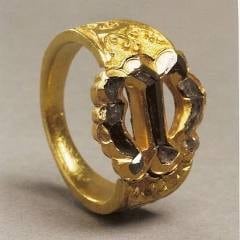
gold ring with letter m set in diamonds
Archduke Maximilian's ring (image courtesy of Oceanside Jewelers)

Archduke Maximilian’s Ring

Point Cut Details: The ring was set with a point-cut diamond, sometimes described as a writing diamond, along with thinner, flat pieces of diamond set to form the letter “M”.

Definition: The point cut was one of the earliest diamond cuts, designed to follow the natural octahedral shape of the rough diamond (a pyramid shape) rather than dramatically reshaping it, typically involving polishing the flat surfaces of the octahedron.

Maximilian’s ring was primarily of point cut diamonds and the stones in this ring don’t shine like we are used to because the maker didn’t have the cutting expertise or knowledge of today.

Some key historical diamond cuts

The practice of diamond cutting began in the Indian subcontinent in the 6th century.

European cutting practices starting in the 14th century where the crystal’s original edges or ‘facets’ were simply polished to even out nature’s octahedral design, called a point cut, as in the ring above.

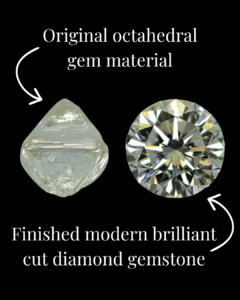
Diamonds start out as an octahedral shape like this and through a series of cuts 58 facets are cut to create the modern brilliant cut.

an uncut diamond gem and a brilliant cut modern diamond

Other notable cuts throughout history are

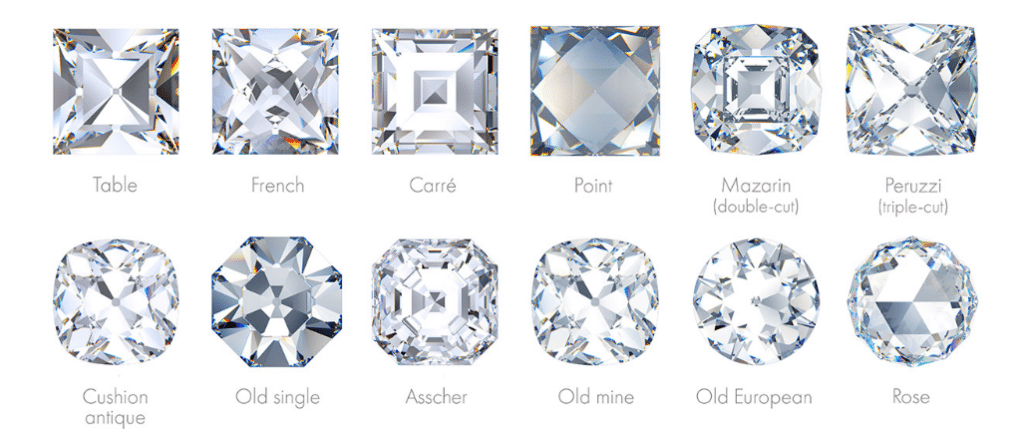
  • Point Cut (14th century) – The earliest form of diamond cutting, which involved polishing the natural octahedral (eight-sided) shape of the diamond to create a symmetrical, pyramid-like point. Also known as the writing stone as there are stories of people scratching notes into surfaces with them.

  • Rose Cut (1600s–1800s): One of the oldest cuts, featuring a flat base and a domed top covered in triangular facets, resembling a rose bud. It produces a subtle shimmer rather than brilliant sparkle. The rose cut dates back to the 1500s and is considered one of the original core diamond cuts. Variations include Antwerp Rose (simpler version), Half Dutch, Full Dutch, amongst others.

  • Mazarin Cut (Mid-1600s): Considered the first true brilliant-cut, featuring 17 crown facets, named after French Cardinal Mazarin, appeared in the mid-1600s

  • Peruzzi Cut (1700s): An improvement on the Mazarin, this cut featured 33 crown facets and is considered a forerunner to the Old Mine cut. Often called the triple-cut brilliant.

  • Old Mine Cut (1700s–1800s): Precursor to the modern cushion cut, these have a squarish, rounded outline with a high crown, small table, and large facets. Named for the old diamond mines of India.

  • Old European Cut (1890s–1930s): The predecessor to the modern round brilliant, this cut is circular with a high crown and small table, designed to maximize sparkle, particularly popular during the Edwardian and Art Deco eras. Named for the “old mines” of Brazil and India, the world’s main diamond sources before South Africa’s discoveries.

a select of diamond showing different cuts and shapes
Image courtesy of "A Guide to Vintage, Antique and Old Diamond Cuts"

The modern round brilliant cut that we recognise today was created in 1919 in by Marcel Tollowsky during his mathematics and engineering course at the University of London. He came from a family of jewellers and in order to impress his father he decided to perfect a mathematical equation to a cut that could maximise the fire and brilliance of diamonds.

  • Fire = the dispersion of light through the stone

  • Brilliance = the return of white light through the stone

Marcel wrote his doctoral thesis entitled Diamond Design: ‘A study of the Reflection and Refraction of Light in a Diamonds’ and this was the innovation of the ‘ideal’ cut. This cut has 58 facets which are precisely aligned to capture and reflect light from every angle. 

It is so ‘ideal’ that the round brilliant is the only diamond shape that receives a “cut grade” from the Gemological Institute of America (GIA), a testament to its scientific precision.

Did you know…

In ancient times it was considered bad luck to cut a diamond due to its sacred connections to the divine. In ancient Hinduism, wearing cut or polished diamonds was against the law, as it was thought to cause misfortune.

A reminder of the four C’s

The grading system developed by the Gemological Institute of America evaluates diamonds using four criteria. These measures assess quality and value. The four C’s are the internationally accepted standard for evaluating a diamond’s quality as follows.

  • Cut – How well the stone reflects light.

  • Colour – Graded from D (colourless) to Z (light yellow or brown).

  • Clarity – Natural internal inclusions or surface marks.

  • Carat – The stone’s weight.

Famous DIAMOND cutters

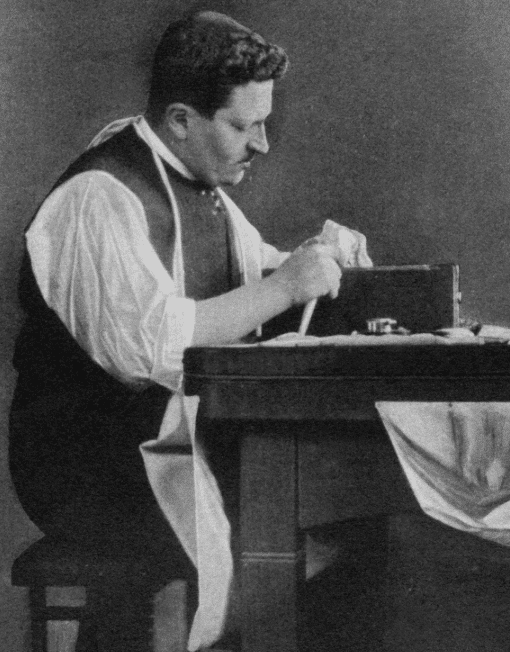
a black and white photograph of Joseph Asscher a diamond cutter working at his work bench
Image courtesy of "Natural Diamonds" website

The work of Henry Morse, Marcel Tolkowsky and generations of diamond cutters before them have contributed to the characteristics of the modern round brilliant cut, and it remains the dominant cutting style to this day.

This is Joseph Asscher at work on the Cullinan diamond, 1908 — a moment that cemented his place in history as one of the world’s greatest diamond cutters. He is also the creator of the Asscher cut.

The Cullinan Diamond is the largest gem-quality rough diamond ever discovered, weighing 3,106.75 carats (621.2 g). Found in 1905 in South Africa’s Premier No. 2 mine, it was cut into nine main stones and 96 smaller pieces. The largest, Cullinan I (530.2 carats), is set in the British Crown Jewels Sovereign’s Sceptre.

JOSEPH ASSCHER & ELIZABETH TAYLOR

The original Asscher cut, developed in 1902 by Joseph Asscher, was the world’s first patented diamond cut, featuring a square shape with 58, large step-cut facets and a high crown.

The patent expired during World War II, allowing other cutters to produce similar shapes. The updated, 74-facet “Royal Asscher” cut is patented.

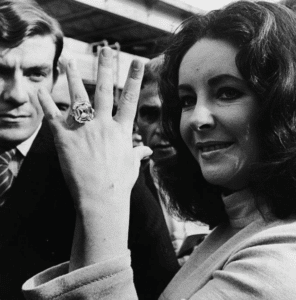
The “Krupp” Ring, once owned by Elizabeth Taylor, is a gorgeous 33.19-carat Asscher cut and was last sold for $8.8 million at auction.

picture of lady with long dark hair holding up her left hand with a massive square cut diamond on her ring finger
Image courtesy of Only Diamonds

Did you know…

The modern round brilliant cut has been the most popular diamond shape for decades according to the Natural Diamond Council’s 2025 Diamond Trends Report.

From Admiration to Craft - a Maker’s Perspective on Diamond Cuts

Personally, I’m a big fan of the rose cut as I was gifted a gorgeous Art Deco bracelet for my wedding with these stunning gems in. I adore the subtle shimmer and history behind the gems.

I am constantly learning about diamonds via my gemmology studies and one day I hope to have a go at cutting them.

Until then I will keep doing my research and learning how to set these perfect little drops of starlight into my jewellery to show off their fire. Keep following me to see how I progress.

If this blog post has interested you I’ve written two other blogs about diamonds so why not check them out now.

SOURCES

Picture of Sam Self

Sam Self

Author

OTHER READS

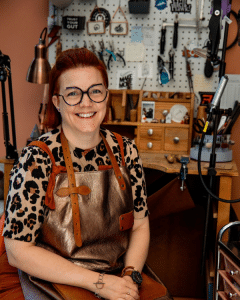
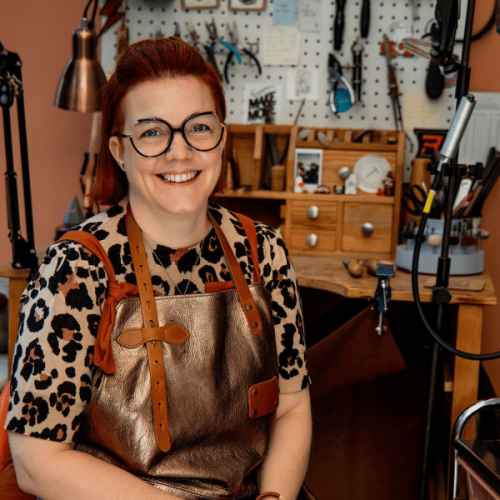
smiling red haired lady in a copper leather apron sat in front of a jewellery bench

Sign up for 10% off your first order!