Few gemstones command attention quite like the ruby.
With its rich pinky red colour and remarkable durability, ruby has captivated people for thousands of years. Ancient rulers prized it above almost every other gemstone, believing it carried the power of life itself. They are believed to have been mined for over 2500 years and have been recognised as being precious and valuable throughout history.
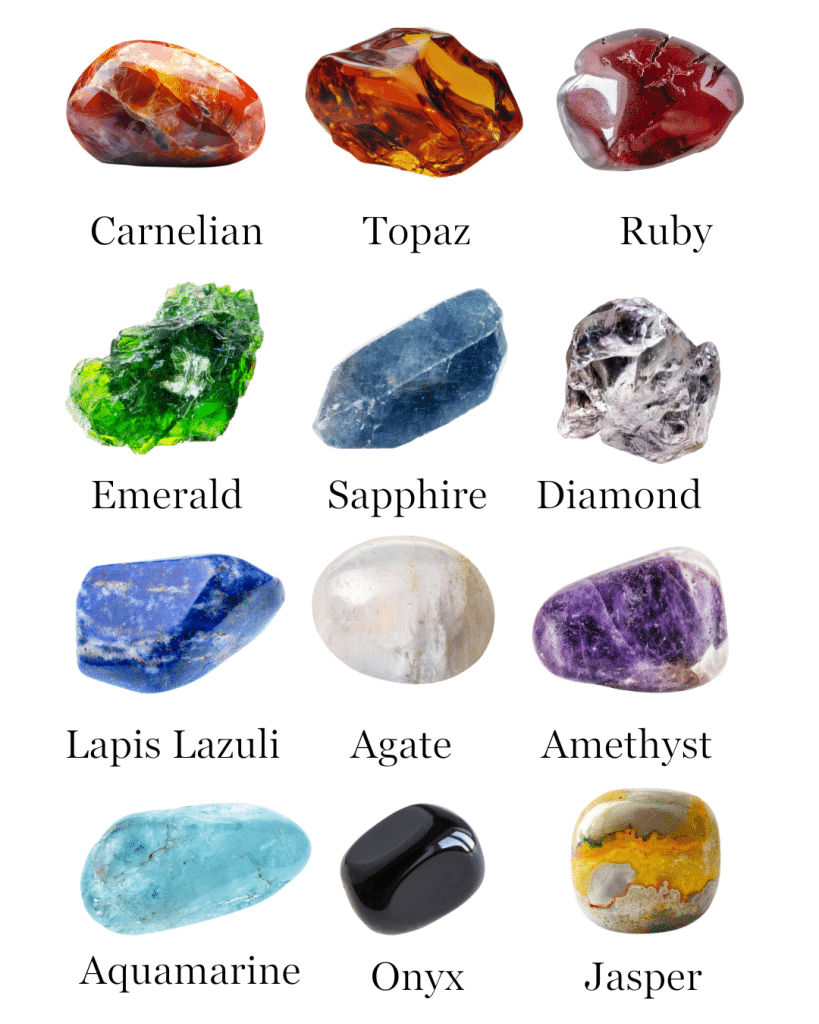
In fact, rubies are mentioned four times in the Bible, in association with attributes like beauty and wisdom. Ruby is also included in the twelve gemstones in the Breastplate of Aaron — a ceremonial piece said to include 12 stones arranged in four rows of three representing one of the twelve tribes of Israel as follows.
Today, it remains one of the world’s most sought-after gems, loved for its vibrant colour, rarity and timeless beauty. Even more so than diamonds!
As July’s birthstone, ruby is often associated with passion, courage and vitality. Whether worn as a meaningful birthstone or simply admired for its striking appearance, ruby has a way of drawing the eye and holding it.
What Makes a Ruby a Ruby?
The first ruby was discovered in India, so the stone was named in the native language. The Sanskrit “ratnaraj” means “king of precious stones”. Ruby belongs to the mineral family known as corundum, the same family as sapphire. In fact, the only thing that separates a ruby from a sapphire is its colour.
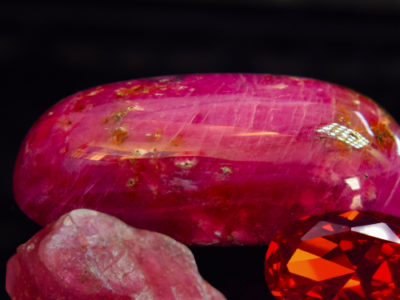
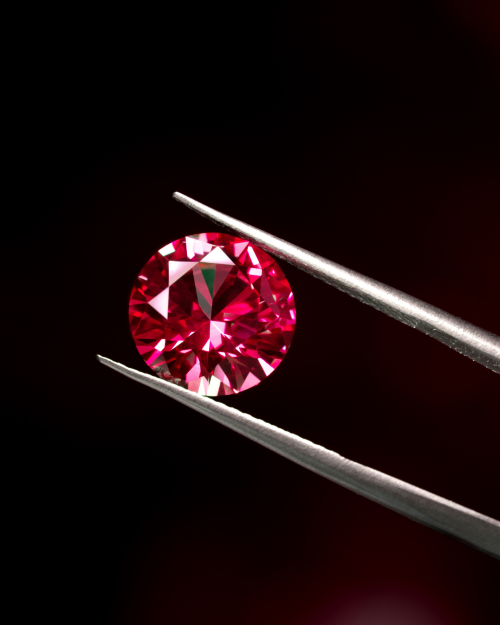
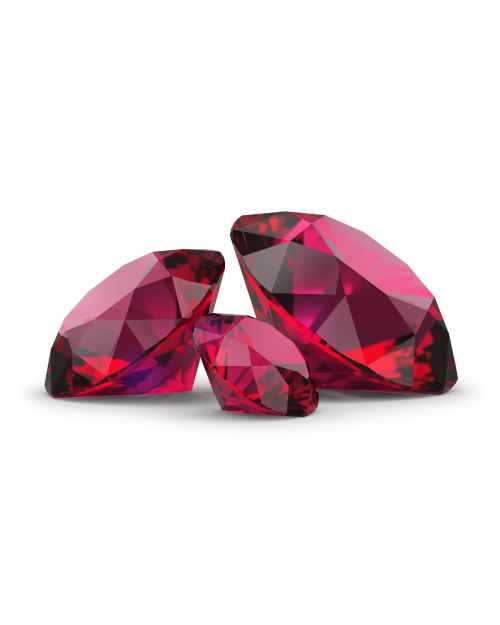
The word “ruby” comes from the Latin word “ruber” for the red hue. All rubies are red, yet they can have orange, pink or purple tints. The vivid red colour comes from traces of chromium within the crystal structure. If ferric iron is also present, the ruby will be a shade of orange or pink. Depending on where it was formed and the amount of chromium present, a ruby’s colour can range from a soft raspberry pink to a deep, rich crimson.
The most prized rubies are often described as having a colour known as “pigeon’s blood” red—a term used to describe a particularly vibrant red with a slight hint of blue making it look fuchsia in colour.
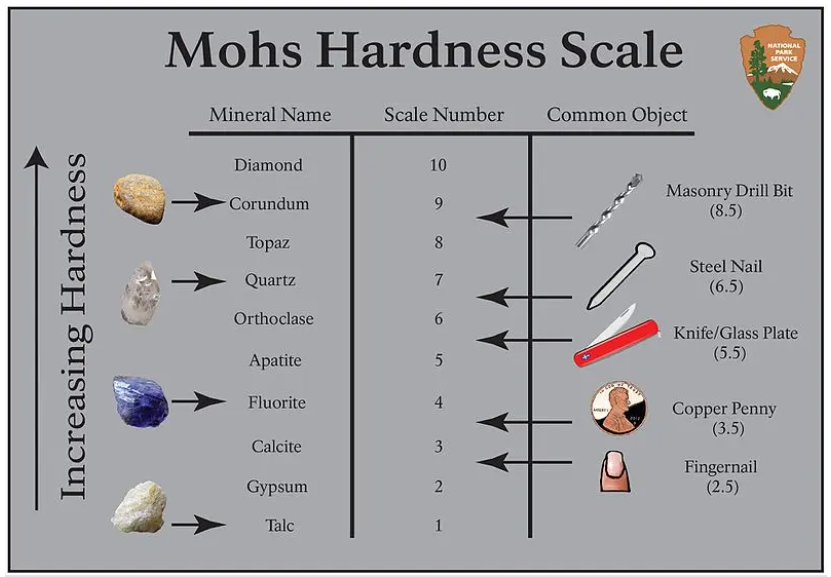
At 9 on the Mohs hardness scale, ruby is second only to diamond in hardness, making it an excellent choice for jewellery that is worn every day.
GEMMOLOGICAL PROPERTIES OF RUBY
- Colour – Ranging from pure vibrant red to orangey-red, purplish-red, or brownish-red.
- Family – Corundum
- Mohs Scale Hardness – 9.0
- Specific Gravity – approx. 4.00
- Refractive Index – 1.762 – 1.772
- Lustre – Adamantine to vitreous
- Crystal System – Trigonal (hexagonal scalenohedral)
- Transparency – Transparent to opaque
- Chemical Formula – Al₂O₃ (Aluminium oxide)
A Stone Treasured Through History
Ruby has been valued for thousands of years across many cultures. Ancient traders carried rubies along the Silk Road, while warriors in parts of Asia believed the stones offered protection in battle. In medieval Europe, rubies were associated with wealth, wisdom and power, often appearing in royal jewellery and ceremonial regalia.
Some historical records suggest that rubies were once considered even more valuable than diamonds. Their rarity, combined with their intense colour, made them symbols of status long before modern gemstone grading existed. Throughout history, ruby’s glowing red colour has often been linked to the heart, fire and life itself.
Where Are Rubies Found?
Some of the world’s most famous rubies come from Myanmar (formerly Burma), whose mines have produced exceptional stones for centuries.
Today, rubies are also mined in countries including Thailand, Sri Lanka, Madagascar, Mozambique and Vietnam. Each location produces stones with slightly different characteristics, influenced by the unique geological conditions in which they formed.
Many modern rubies undergo heat treatment to improve colour and clarity, a widely accepted practice within the gemstone industry as long as it is disclosed. Untreated rubies with exceptional colour and clarity are particularly rare and highly valued.
Ruby in Jewellery
Ruby’s durability makes it well suited to rings, pendants, earrings and bracelets.
Its rich red colour pairs beautifully with both silver, rose gold and copper, creating jewellery that feels equally at home in contemporary and vintage-inspired designs.
For centuries, ruby has been a favourite centre stone for engagement rings, royal jewels and heirloom pieces. Yet it can be just as striking in simple everyday jewellery, where its colour takes centre stage.
A well-cut ruby seems to glow from within, catching light in a way that gives the stone an unmistakable warmth.
Ruby Symbolism
While gemstone meanings vary across cultures and eras, ruby has long been associated with
Passion
Courage
Strength
Protection
Vitality
Love
Its fiery colour naturally lends itself to themes of energy and confidence, making it a meaningful gift for birthdays, anniversaries and other special occasions.
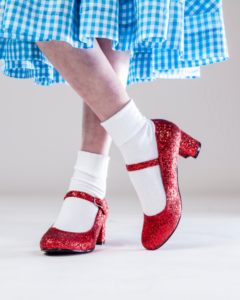
In the Middle Ages, Chinese noblemen wore this gem proudly on their armour to welcome protection and strength. Even Dorothy’s ruby slippers in the Wizard of Oz were supposed to protect her from evil.
When is a ruby not a ruby
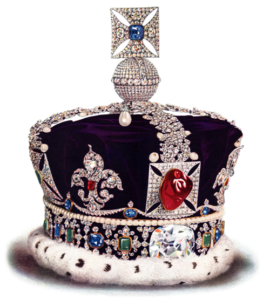
When it’s a spinel! The Black Prince’s Ruby sits in the Imperial State Crown above the Cullinan II (read my Diamond blog about the Cullinan I).
This ruby is named after Edward of Woodstock. Although commonly referred to as a ruby, this stone is a red spinel. Prior to 1783 when spinels were first chemically differentiated from rubies, all red gemstones were called rubies. Rubies are corundum stones, whereas spinels are made up of magnesium, iron, oxygen and chromium. The Black Prince’s Ruby is the largest uncut spinel in the world, so it is still a rarity.
A Star in a Ruby?
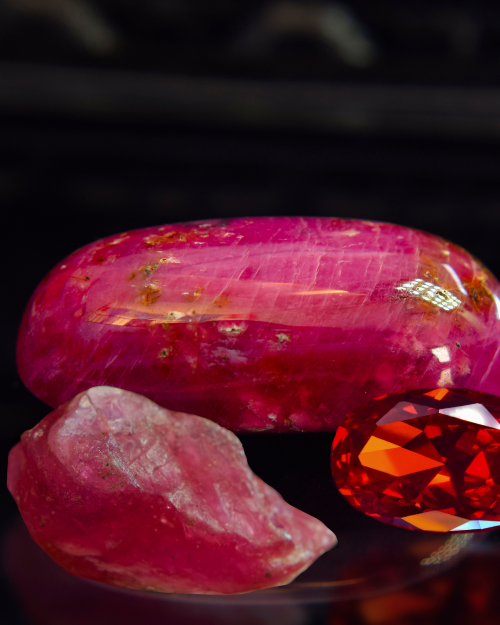
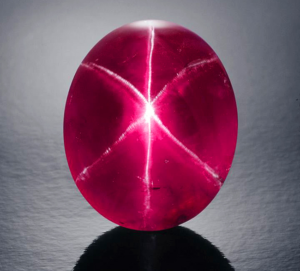
The DeLong Star Ruby, a 100.32-carat (20.064 g) oval cabochon star ruby was discovered in Burma in the 1930s, it now lives at the Museum of Natural History in New York City. Involved in a high-profile theft from the museum in 1965, this beautiful stone is unique in that is features asterism (star features) within the gem. Other gemstones feature asterism but this one is particularly magnificent.
A Stone of Fire and Endurance
Ruby combines beauty, rarity and durability in a way few gemstones can match.
From ancient kingdoms to modern jewellery workshops, its rich red glow has inspired admiration across generations. It is a gemstone that feels both timeless and vibrant—bold enough to make a statement, yet classic enough to never go out of style.
For those born in July, ruby is a fitting birthstone: bright, enduring and full of character.
While I haven’t yet worked with rubies in my collections, I can certainly appreciate why this fiery gemstone has fascinated jewellers and gemstone lovers for centuries. Its rich colour and remarkable durability make it one of nature’s most extraordinary treasures.