BLOG

October’s Birthstones: A little mystery, a lot of colour

October has not one, but two official birthstones – and between them, they cover just about every colour you could imagine.

First up is opal, famous for its flashes of red, green, blue and gold that seem to move across the surface of the stone. Then there’s tourmaline, a gemstone that comes in an astonishing range of colours, from vivid pinks and greens to deep blues, reds. It even has one with copper!

So, if you were born in October, you have some seriously colourful options.

Opal: The Gemstone That Plays With Light

gemstone with fire rainbow effect
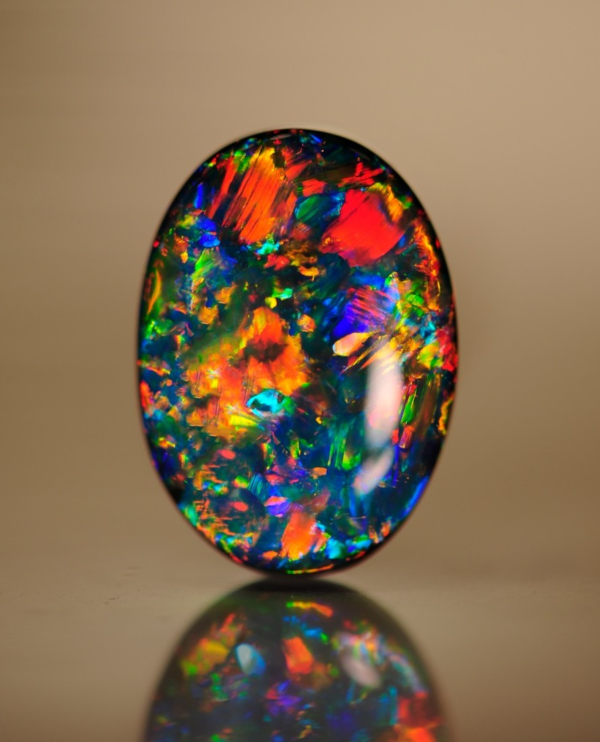
Black Opal (courtesy of Gem-A)

Opal is one of those gemstones that is difficult to mistake for anything else. Unlike most gemstones, which have a relatively consistent colour, precious opal can display flashes of different colours as it catches the light.

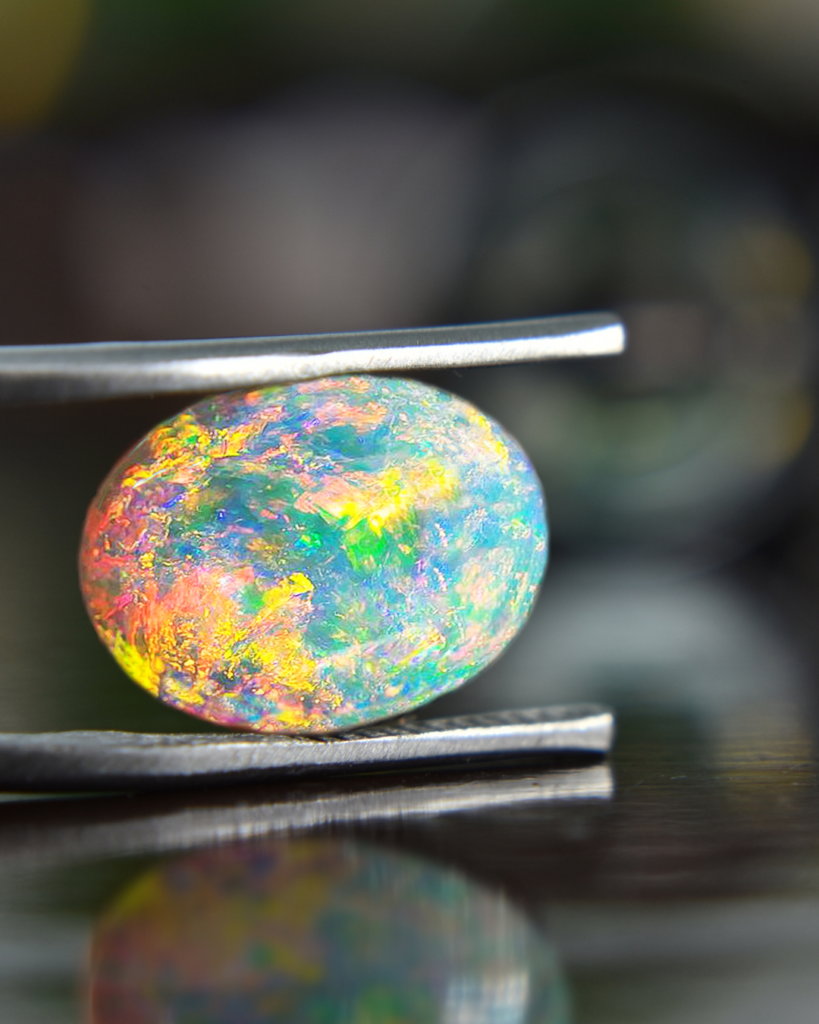
This effect is known as play-of-colour, and it is caused by the way tiny structures within the opal interact with light. The result can be anything from subtle flashes of blue and green to a spectacular rainbow of colours.

No two pieces are quite the same, which is definitely part of the appeal.

opal origins

Australia is particularly famous for its opal, and Australian opals have been mined commercially since the 19th century. Some of the best-known opal mining areas include Coober Pedy, Lightning Ridge and Andamooka.

But Australia isn’t the only source. Opal is also found in places including Ethiopia, Mexico and the United States.

The appearance of an opal can vary enormously depending on where it comes from and how it formed. Some are dark and dramatic, others are pale and almost translucent, while fire opal is known for its warm orange, yellow and red body colour. More on this in a bit.

rainbow effect opal gemstone in tweezers

A Little Opal History

selection of iridescent opal stones

Opal has been admired for centuries. Its name is thought to have come from the Greek word opallios, meaning something along the lines of “to see a change”. It’s easy to see why. The shifting colours of opal have fascinated people for thousands of years, and unsurprisingly, the stone has collected plenty of stories and folklore along the way.

Romans gifted them to their wives for good fortune, hope and purity. Greeks thought opals gave you power of foresight and prophecy. Egyptians also loved opals for their powerful and positive attributes.

ARE OPALS BAD LUCK?

Book cover of Anne of Geierstein

The belief that opals are unlucky started in the 19th century because of a fictional story by Sir Walter Scott as well as business competition from diamond traders.

In 1829, Scott wrote “Anne of Geierstein” in which a character named the Baroness of Arnheim wears an opal talisman with supernatural powers. The Baroness dies when a drop of holy water falls onto the opal and drains the stone of its colour. Amazingly whilst the book was a hit, sales of the gemstone dropped by 50% and remained low for 20 years after!

And of course De Beers got involved again! As large quantities of opal flooded the market at the turn of the 20th century De Beers thought this would threaten diamond sales. As a result they allegedly created a rumour that opals were bad luck and promoted it with gusto.

opal rumours (courtesy of the Black Star Opal website)

  • Only those born in October are safe to wear them as their birthstone.

  • Opals should never be given or accepted as a gift.

  • If opals are gifted, bad luck can be negated by handing its giver a small sum of money to turn it into a financial transaction, and thus break the curse.

  • Engagement rings must never contain an opal, else the new bride will quickly become a widow.

  • White or milky opals are regarded as jinxed, but black opals are thought extremely lucky.

  • Setting opals with diamonds negates the stone’s ability to draw sorrow to the wearer as diamonds are said to have power over the opals.

  • Opals turn pale in the presence of poison, and lose their shine once their owners die.

The Many Faces of Opal

One of the most interesting things about opal is just how varied it can be.

White opal has a pale or milky body colour and can show flashes of rainbow colour.

Black opal has a darker body tone, which can make its play-of-colour appear particularly vivid.

orangey red opal on grey background
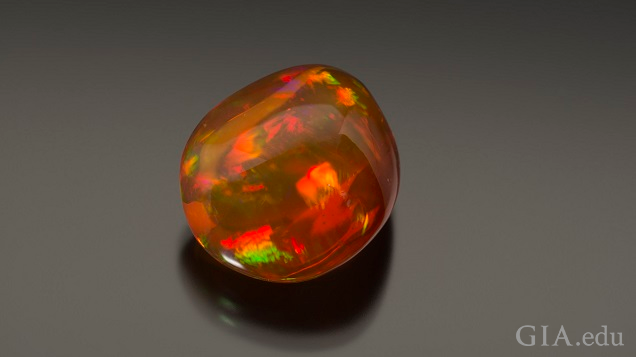
A fire opal (courtesy of GIA)

Fire opal is usually yellow, orange or reddish in body colour and is particularly associated with Mexico. Not all fire opal displays play-of-colour, but its warm colours make it distinctive all the same.

For a jeweller, that’s part of the fun. Opal isn’t a gemstone that always wants to look perfectly uniform – and that’s exactly what makes it interesting.

GEMMOLOGICAL PROPERTIES OF OPAL

  • Color All colors
  • Family Opal
  • Mohs Scale Hardness 5.5 to 6.5
  • Specific Gravity 2.10 to 2.20
  • Refractive Index 1.37 to 1.47.
  • Lustre Subvitreous to waxy.
  • Crystal System Amorphous (lacks a traditional crystalline lattice).
  • Transparency Transparent to translucent
  • Chemical Formula SiO₂ ⋅ nH₂O (hydrated silica with 3% to 21% water content).

Tourmaline: October's Colourful Alternative

If opal isn’t quite your thing, October has another fantastic option: tourmaline.

In fact, calling tourmaline “colourful” might be something of an understatement.

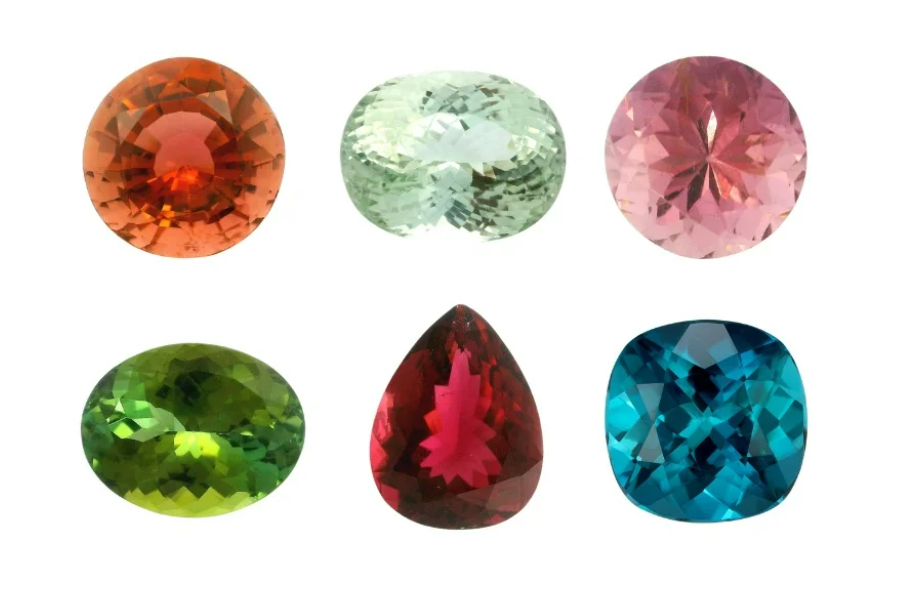
Tourmaline occurs in a huge variety of colours, including pink, green, red, blue, yellow, brown and black. Some crystals can even contain more than one colour.

One of the most famous varieties is watermelon tourmaline, which can show green around the outside with a pink or red centre.

6 different coloured gemstones on a white background
Courtesy of Flawless Fine Jewellery

Tourmaline Through History

Tourmaline has been known and used for centuries, although it wasn’t always recognised as a separate gemstone.

Some of the earliest examples known in Europe were brought back by Dutch traders from Sri Lanka in the 17th century.

The name “tourmaline” is thought to come from the Sinhalese word turmali, which was used for a variety of coloured gemstones.

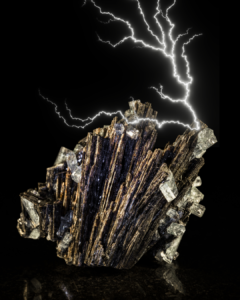
Tourmaline also has some interesting physical properties. When heated or rubbed, it can develop an electrical charge, a property known as pyroelectricity or triboelectricity depending on how the charge is produced.

black crystal with fake lightning emitting from it

COPPER & TOURMALINE

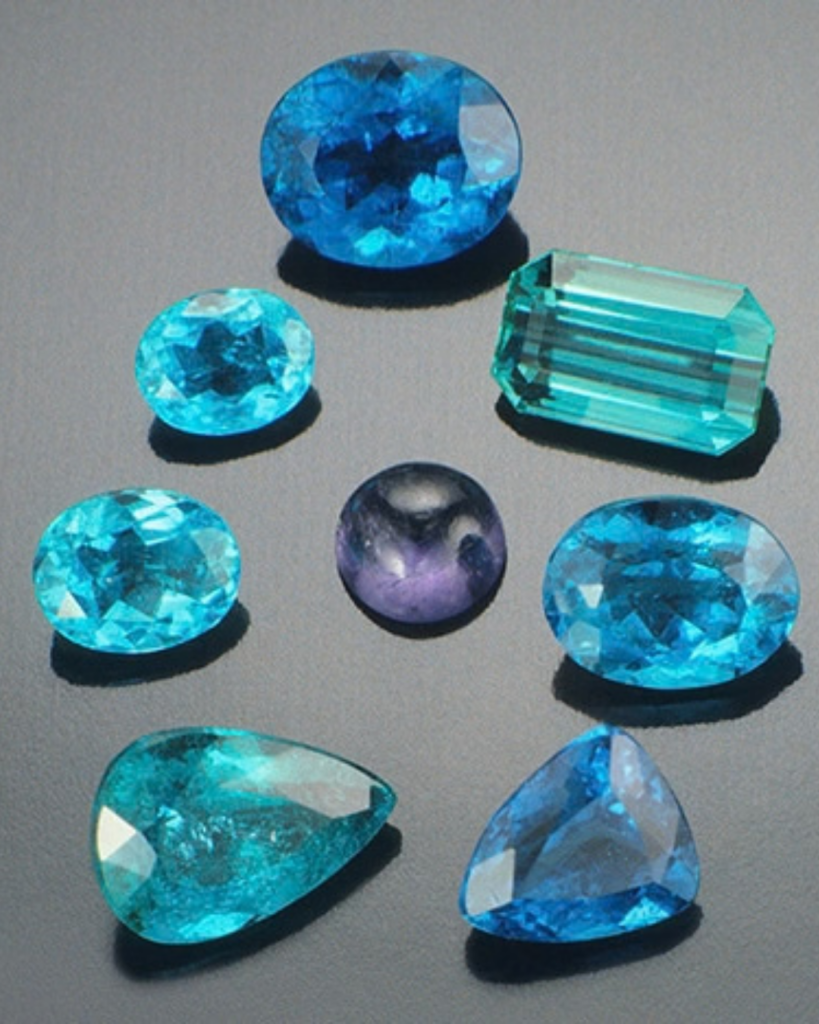
Of course, I had to mention a gorgeous copper-bearing gemstone known for its vivid, neon blue and blue-green glow called Paraiba Tourmaline.

This gemstone derives its name from the Brazilian state of Paraíba where it was first discovered in 1987 with later deposits found in Nigeria and Mozambique.

Measuring 7 to 7.5 on the Mohs scale, copper traces are responsible for its extraordinary neon blue-green glow.

Exceptionally rare, only one Paraiba tourmaline is mined for every 10,000 diamonds, making them one of the rarest gemstones on earth.

selection of neon blue and neon green gemstones
Paraíba Tourmaline (courtesy of GIA)

October Birthstone Meaning

Both October birthstones have traditionally been associated with qualities such as creativity, individuality and emotional balance.

Opal’s changing colours have made it a natural symbol of imagination and originality, while tourmaline’s incredible colour range lends itself nicely to ideas of diversity and self-expression.

And perhaps that’s the nicest thing about October’s birthstones: there really isn’t one “right” way for them to look.

You can choose soft and subtle, bright and colourful, dark and dramatic or somewhere in between.

A Gemstone for Every October Birthday

Whether you’re drawn to the mysterious flashes of an opal or the incredible variety of tourmaline, October gives you plenty of choice.

And if you’re not an October baby, there’s no rule saying you can’t wear them. Unless you still believe opals to be unlucky for those NOT born this month?!

Birthstones might traditionally be associated with particular months, but gemstones have never been particularly good at following rules. If you like the colour, the history or simply the way a particular stone looks in a piece of jewellery, that’s reason enough.

At Rock & Rose Jewellery, I love working with gemstones because every stone brings its own character to a piece. Natural variations in colour, pattern and texture mean that the finished jewellery can feel genuinely individual – which is exactly how I think jewellery should be.

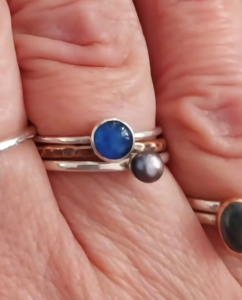
I have even worked with opal for my friend Karen and made the blue stone on her finger seen here.

ladies fingers with rings
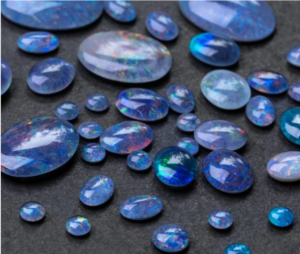
opal triplet cabachon gemstones from Kernowcraft
Opal Triplet Cabs (courtesy of Kernowcraft)

As opal is a ‘soft’ stone to work with jewellers, including me, can be a bit nervous but I used an opal triplet cabochon from Kernowcraft as it was less likely to break when being set. A triplet is made from three layers, with a thin slice of opal sandwiched between a clear quartz cap that protects the opal and the black onyx backing enhancing the beautiful blue base colour and opal fire within the stone.

October's Birthstones at Rock & Rose

October’s birthstones are a brilliant reminder that gemstones don’t have to be predictable.

From the flashes of colour hidden inside opal to the extraordinary range of shades found in tourmaline, these are stones with plenty of personality – and I think that’s rather fitting for a birthstone.

If you’re looking for a birthstone piece, take a look at my Gemstone Jewellery collection, where you’ll find pieces made with a variety of natural gemstones. You can also message me about a commission if there is a stone that I don’t currently have in stock.

SOURCES

https://www.blackstaropal.com/blogs/news/the-bad-luck-myth-about-opal

https://www.gia.edu/opal

https://www.kernowcraft.com/products/opal-triplet-cabochons?variant=52661390737755

https://www.flawlessfinejewelry.com/gemstones/tourmaline/paraiba/

https://www.flawlessfinejewelry.com/guides/gemstones/tourmaline-gemstones-the-ultimate-guide/

https://www.pragnell.co.uk/guides/rare-gemstones/paraiba-tourmaline

https://www.gia.edu/gems-gemology/winter-2019-paraiba-tourmaline-geographic-origin-determination

https://www.gia.edu/gia-news-research/fall-autumn-gems

https://www.gia.edu/tourmaline-history-lore

https://gem-a.com/gem-hub/understanding-precious-black-opal-and-its-properties/

Picture of Sam Self

Sam Self

Author

OTHER READS

smiling red haired lady in a copper leather apron sat in front of a jewellery bench

Sign up for 10% off your first order!